
The King's Transparency Gambit
It is considerably easier to reveal one’s tax bill voluntarily than to have it extracted
One begins with a note about this publication’s architecture. The free tier carries reporting on events as they occur, analysis of the news cycle as it breaks, and commentary on matters the broader discourse is already engaged with. The paywalled dispatches, of which this is one, attempt something rather different: they examine the structural logic beneath the events, the institutional mathematics that the news cycle does not tend to interrogate with sufficient rigour. The distinction matters because what follows requires a certain patience with complexity that breaking news, by necessity, does not permit.
That preamble serves a purpose. What we are examining today is not merely a set of financial disclosures. It is a recalibration of how an ancient institution manages its relationship with democratic scrutiny in an age where opacity is no longer sustainable. This is structural analysis. It is worth the deeper read.
One observes, with something approaching approval, that the Palace has finally grasped a rather fundamental rule of modern institutional life: it is considerably easier to reveal one’s tax bill voluntarily than to have it extracted under duress.
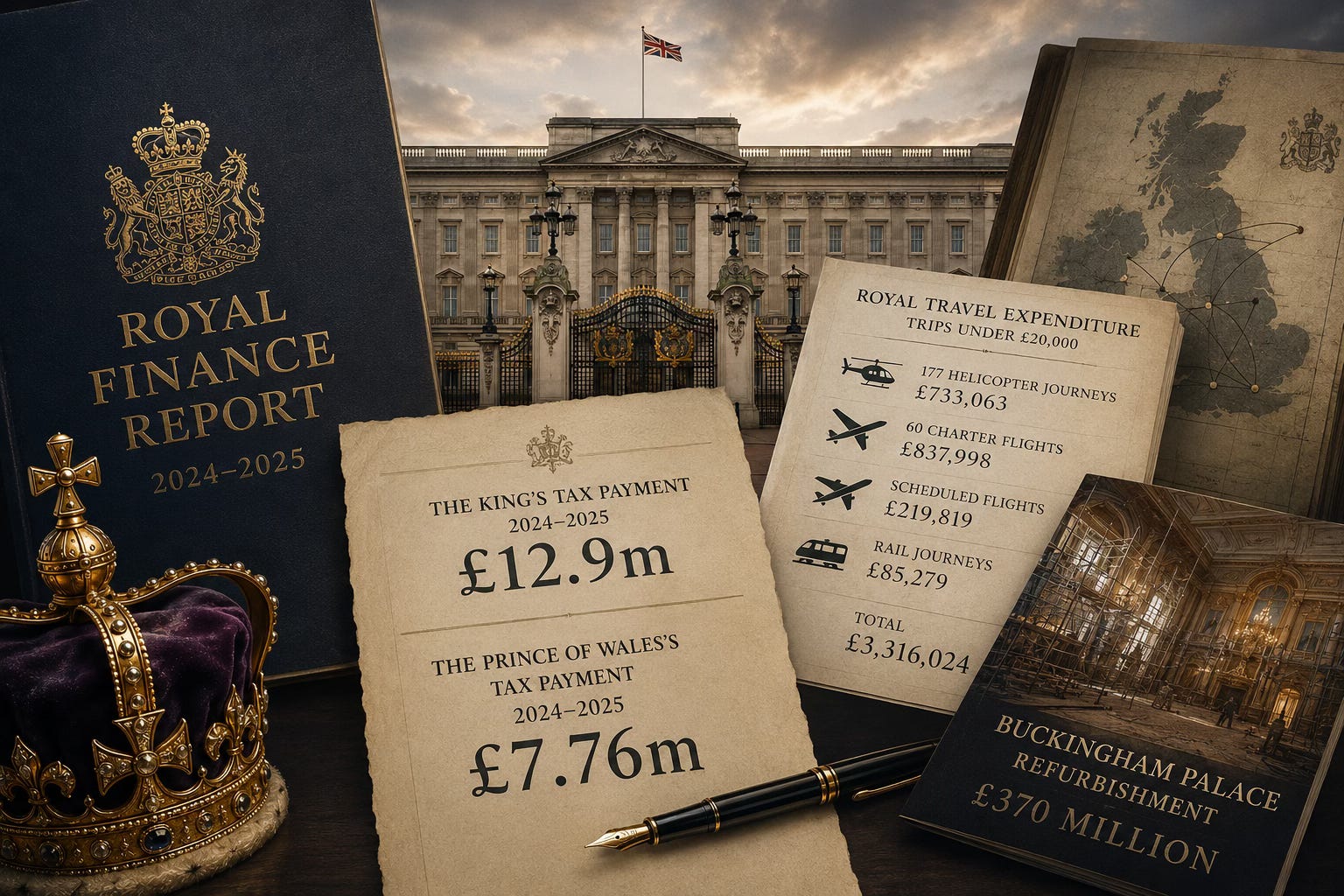
The King’s disclosure of £12.9m in tax for 2024-25, followed by the Prince of Wales’s corresponding figures, represents a calculated recalibration of the monarchy’s relationship with public scrutiny. It was, one might suggest, a move executed not from altruism but from institutional necessity. The Andrew situation and subsequent hectoring about royal finances had created a narrative vulnerability that was becoming actively dangerous. This disclosure closes that particular wound, or appears to. Transparency, properly deployed, is an excellent form of institutional defence.
On the Tax Figures Themselves
The figures are instructive in ways that merit unpacking. They place the King among the top 100 UK taxpayers, which simultaneously demonstrates both his personal wealth and his willingness to contribute visibly to the public purse. The detail that neither man’s offices offered granular accounting of how the figures were calculated (capital gains versus income, deductions applied, timing of realisation) is, shall we say, a tactful withholding.
