
Catherine Is Becoming Unavoidable
And the institution should be grateful for it.
A note before we begin. Deep Crown depends on the generosity of paid subscribers to function. If you have been reading on the complimentary tier and find value here, the link below is how you make this sustainable. Those who already subscribe have my genuine gratitude.
A further note, while I have your attention: I have travel planned for the week of the eighteenth. The newsletter will be quieter than usual that week after next, though not silent. I have written several pieces in advance that will go out on schedule. I mention this not to excuse anything but simply because I find unexplained absences in a publication to be a form of bad manners.
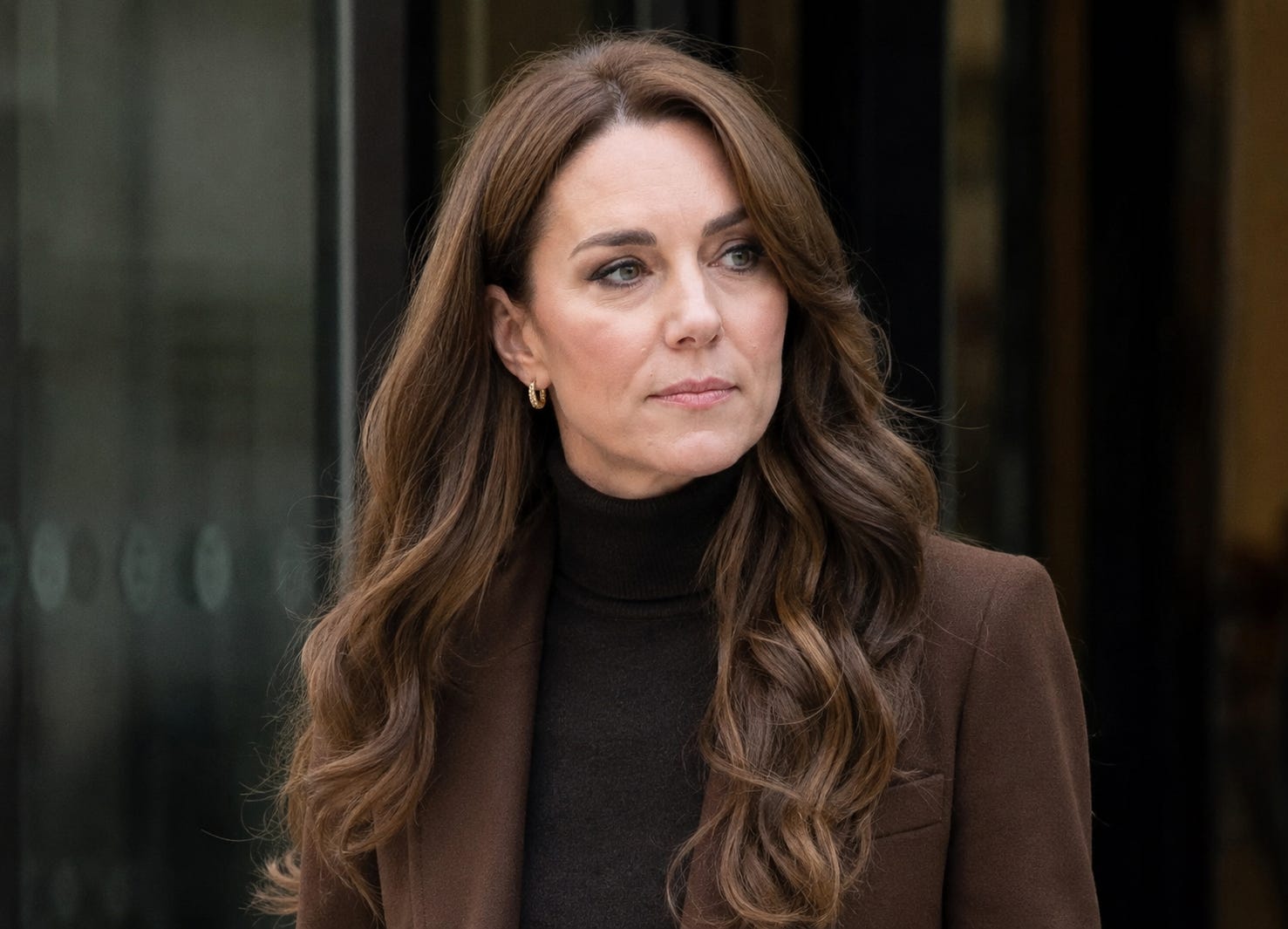
There is a particular kind of royal who succeeds not by commanding the room but by outlasting everyone else in it. Not through cunning, exactly. Not through charm alone. Through something more durable and considerably less fashionable: consistency, over time, in the direction of something real.
Catherine, Princess of Wales, is becoming that figure. And if you have not noticed yet, you will.
This week she visited the University of East London, meeting families and researchers as part of her Royal Foundation Centre for Early Childhood’s latest initiative, a practical, substantial guide for professionals working with children from birth to age five. Teachers. Health visitors. Family support workers. The people who do the actual work, largely without recognition, in the spaces where early emotional development either takes root or fails to. Next week she travels to Reggio Emilia in northern Italy, a city internationally regarded for its pioneering philosophy of early childhood education. It will be her first overseas working visit since her cancer treatment concluded.
That last detail deserves more than a passing mention. We have grown so accustomed to royal engagements as a kind of choreographed reassurance - the wave, the flowers, the carefully managed walkabout - that we sometimes forget to notice when someone is doing something genuinely different. Catherine’s first trip back to the international stage was not a recuperative holiday somewhere warm and discreet. It was not a soft reintroduction via a beloved charity gala or a comfortable home counties engagement. It was a working visit, with a specific purpose, to a specific place, chosen because of what she might learn there rather than how she might appear.
One does not stumble into that choice. One makes it deliberately. And the deliberateness tells you a great deal about the woman making it.
The Centre for Early Childhood has existed since 2021, which means Catherine has now spent the better part of four years building something that will outlast any single engagement, any single headline, any single difficult year. The guide released this week runs to over a hundred pages. It is research-backed, practically oriented, and aimed not at generating public sentiment but at changing professional behaviour on the ground. This is not a campaign in the conventional sense. It is closer to institution building, the slow, unglamorous work of embedding ideas into systems so that they persist long after the press photographs have been archived.
I have watched a number of royals announce initiatives with considerable fanfare and less considerable follow-through. The gap between the launch and the legacy tends to be revealing. What distinguishes Catherine’s approach is that there is no obvious gap. The work has accumulated year on year, growing in ambition and specificity, without the periodic rebranding that signals an initiative has run out of genuine momentum and is surviving on publicity alone.
There is also the question of subject matter. Early childhood development is not a glamorous brief. It does not generate the kind of coverage that attaches itself to more visually arresting causes. It requires explaining, repeatedly, why what happens to a child before the age of five determines outcomes that will not become visible for another decade or two. It asks people to care about consequences they cannot yet see, which is, politically and publicly, one of the harder things to ask.
What strikes me, watching this unfold, is how completely she has absorbed the central lesson of institutional longevity: that the monarchy’s survival depends not on visibility but on indispensability. To occupy ground that is difficult to replicate. To work in areas where a patient, non-partisan institution can go where elected governments, perpetually distracted by electoral cycles and departmental budget pressures, consistently fail to sustain attention.
King Charles understood this with the environment, at a time when caring about such things was considered eccentric at best and politically inconvenient at worst. He was decades ahead of the conversation and had the considerable satisfaction of watching the conversation eventually arrive at his position. Catherine appears to be operating with the same instinct applied to early childhood, and I suspect she will have a similar experience, the slow vindication of those who work on problems before they become crises.
The causes differ. The institutional logic is identical.
There is a broader frame worth placing around all of this, which I raise not to be invidious but because it is analytically relevant. The monarchy has spent several years navigating questions about what it is for, who it serves, and whether its various members are pulling in the same institutional direction. Some of those questions have been more pointed than others. Some of the answers have been less satisfying than one might have hoped. Against that backdrop, Catherine represents something the institution badly needed and was not entirely certain it would get: a future Queen who has done the work of understanding what the job actually requires, and who appears genuinely committed to doing it.
The institution has not always made it easy to feel optimistic about what comes next. The recent past has offered its share of reasons for anxiety about the long-term picture. But Catherine, methodically and without apparent interest in being credited for the effort, keeps providing reasons to revise that assessment downward.
She is becoming unavoidable. The monarchy should count itself fortunate that she is on its side.
The institution is very very lucky to have the Princess of Wales. It could have all gone so far in another direction and so badly.
William made a good decision a long time ago and it will pay off for the monarchy for decades.
Yes Catherine is a huge asset to the Monarchy & of course to her own family & the wider Royal Family. Like Queen Elizabeth, whose leadership was defined by an unswerving sacred duty & commitment to service without drama & fuss, the Princess has built a reputation for quiet, dedicated work on issues she considers foundational to society. This no doubt greatly appealed to Prince Philip, who often counseled family members to 'just get on with it', whether the spotlight shown on them or not. It's apparent that King Charles is very fond of her & relies on her steadiness of purpose & talents.
Her early childhood initiative is more important than ever as parents find themselves stretched thin to provide a living wage for their household. Some families feel they cannot get by with only one working parent. But as more parents realize the importance of the first five years, more are making sacrifices to insure this important foundational start is provided. They've become aware of research showing that the first 5 years of life are critical for building resilience & shaping future mental health. The Princess has noted that many of society's hardest challenges—including addiction, violence & poor mental health—often have their roots in early life experiences. As we see by the growing number of disturbed youth who often turn to violence & mass shootings to act out their frustrations & mental pain.
Catherine is a steadying influence, calm, resilient & perseverant. With all the turmoil in the Royal Family of late, i know these traits must be hugely valued. We are all so grateful that she seems to have recovered so well & is back to her normal routine.